Furniture Design · 2022
Echo Form
01 / THE CORNER
One line, two directions.
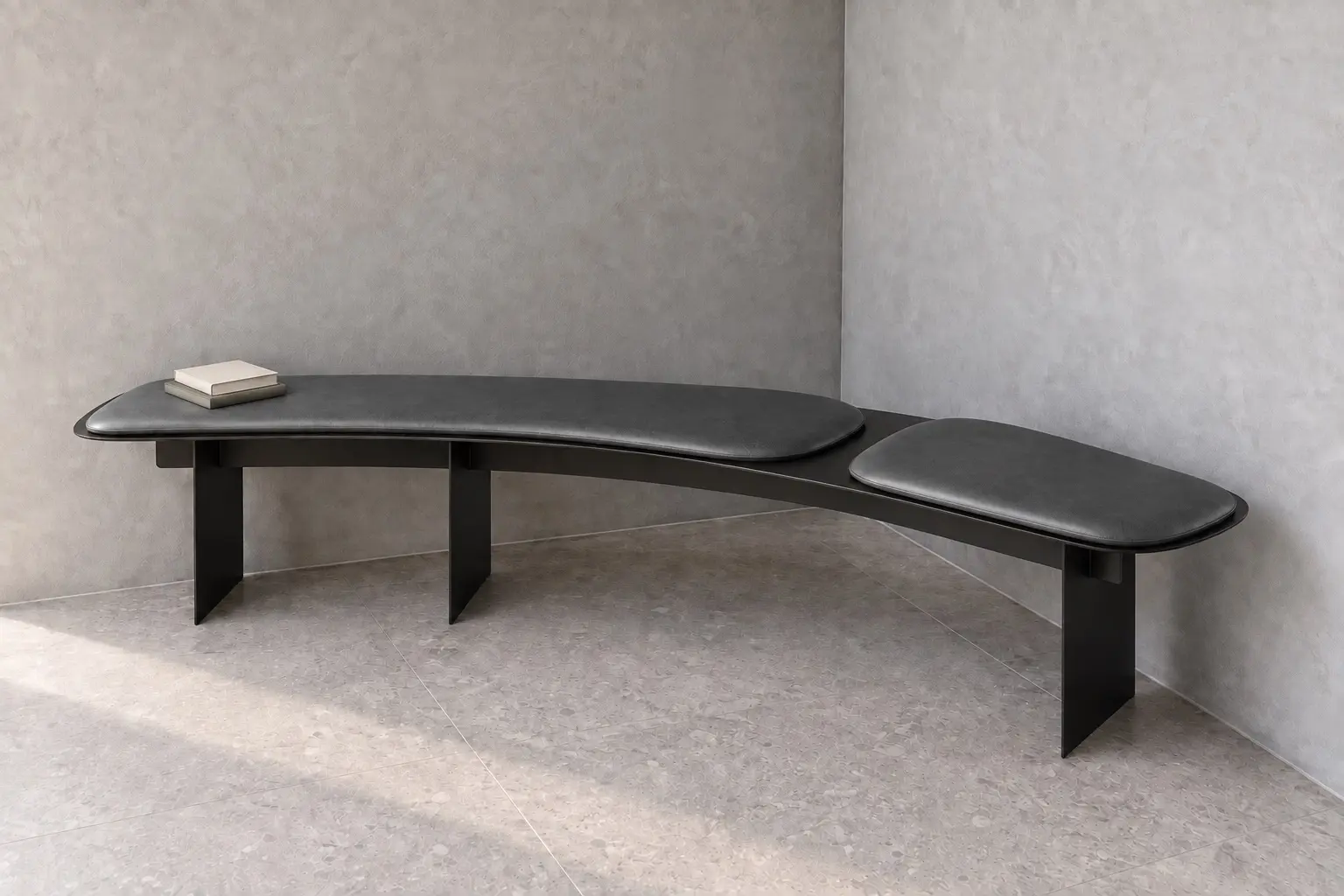
Echo Form begins at a change in direction. Its long and short seats follow two adjoining edges, making a place to pause where a room turns. The bend belongs to the space as much as to the bench.
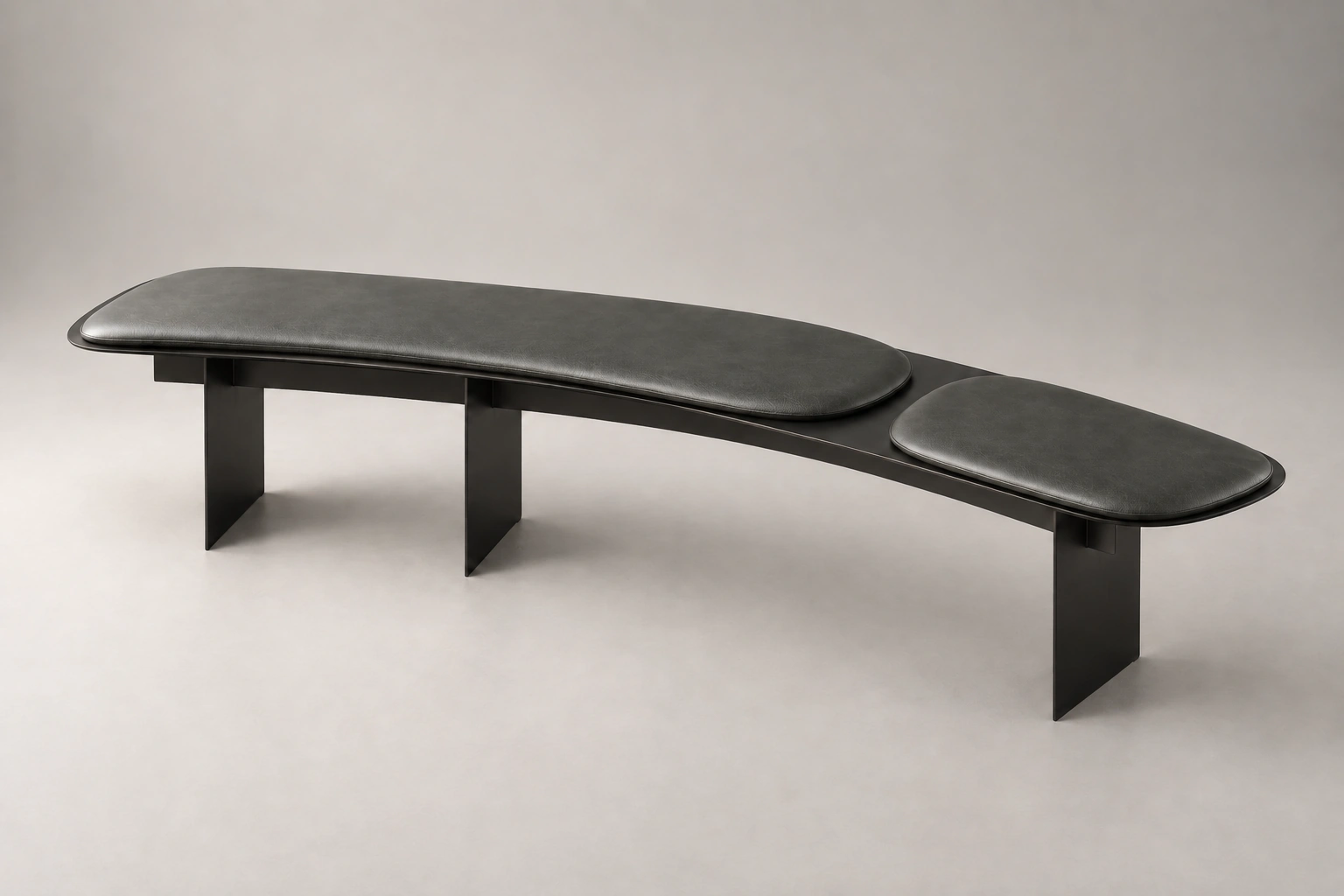
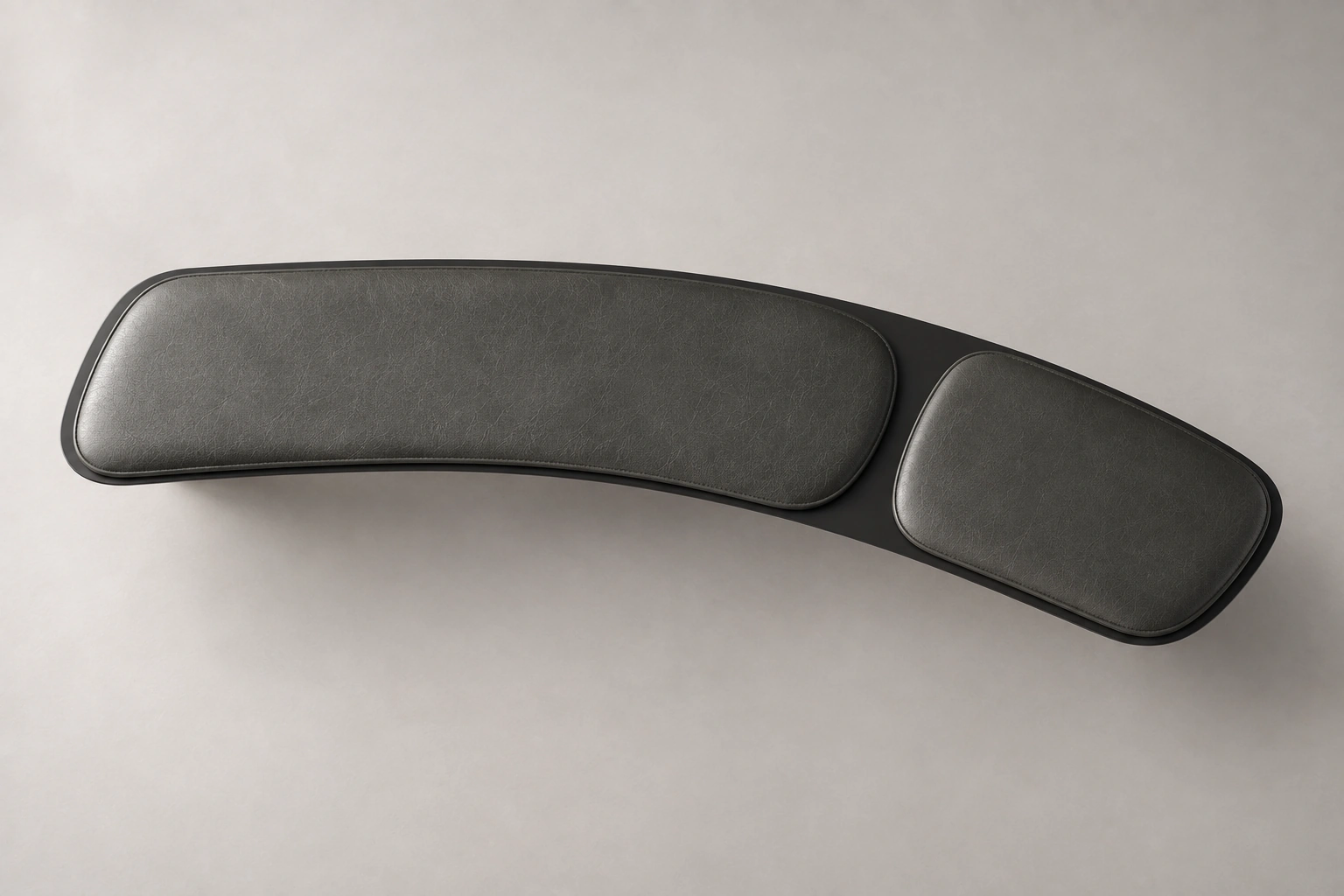
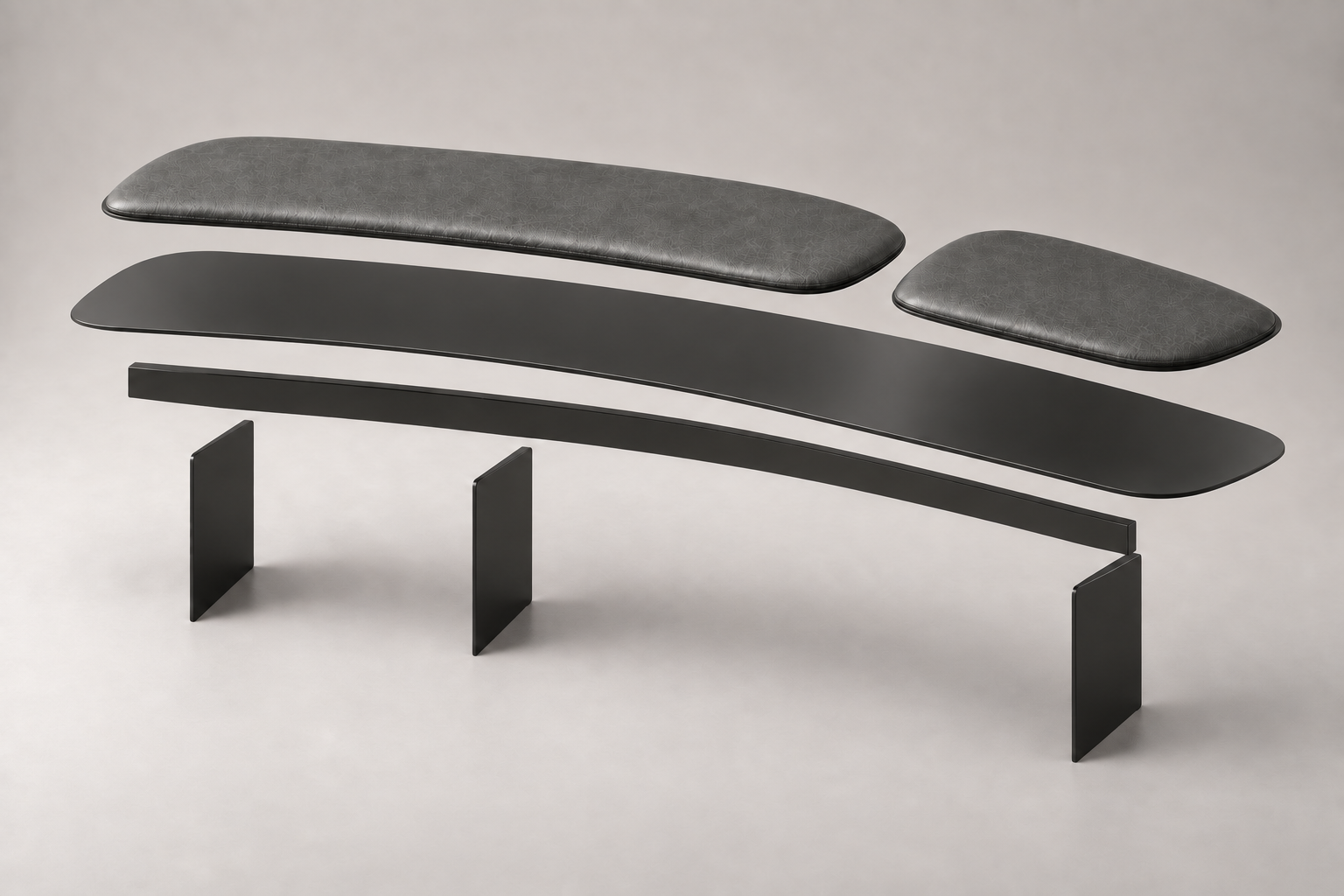
A continuous steel plane carries two unequal upholstered surfaces. The small interval between them marks the turn, while the frame holds the whole together. The result is a long seat with a quieter, shorter end.
LINE → TURN
Continuity does not mean an unchanging direction.
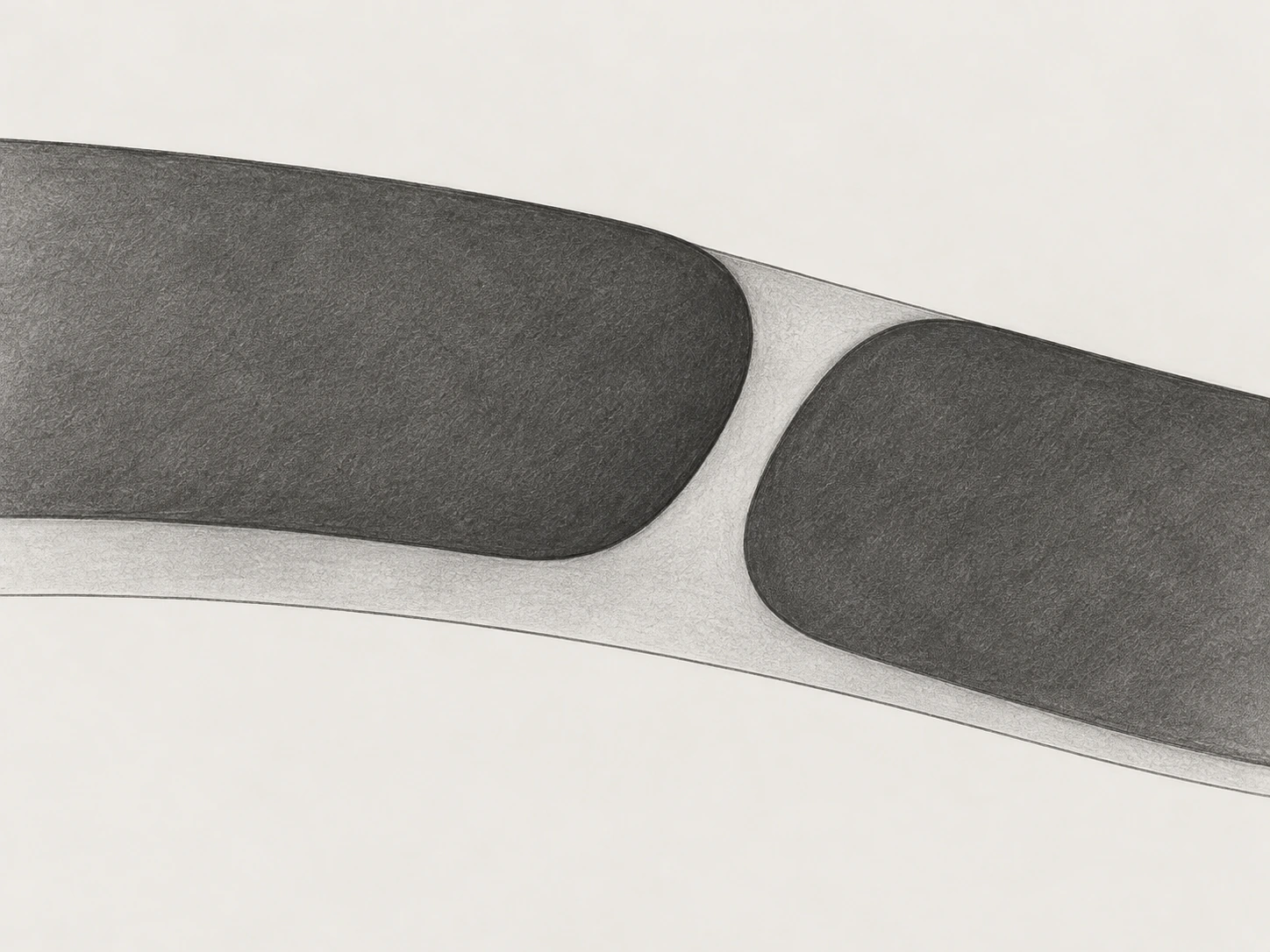
CONTINUITY / INTERVAL
The upholstered surfaces pause here. The base continues.
02 / FORM STUDIES
Finding the turn.
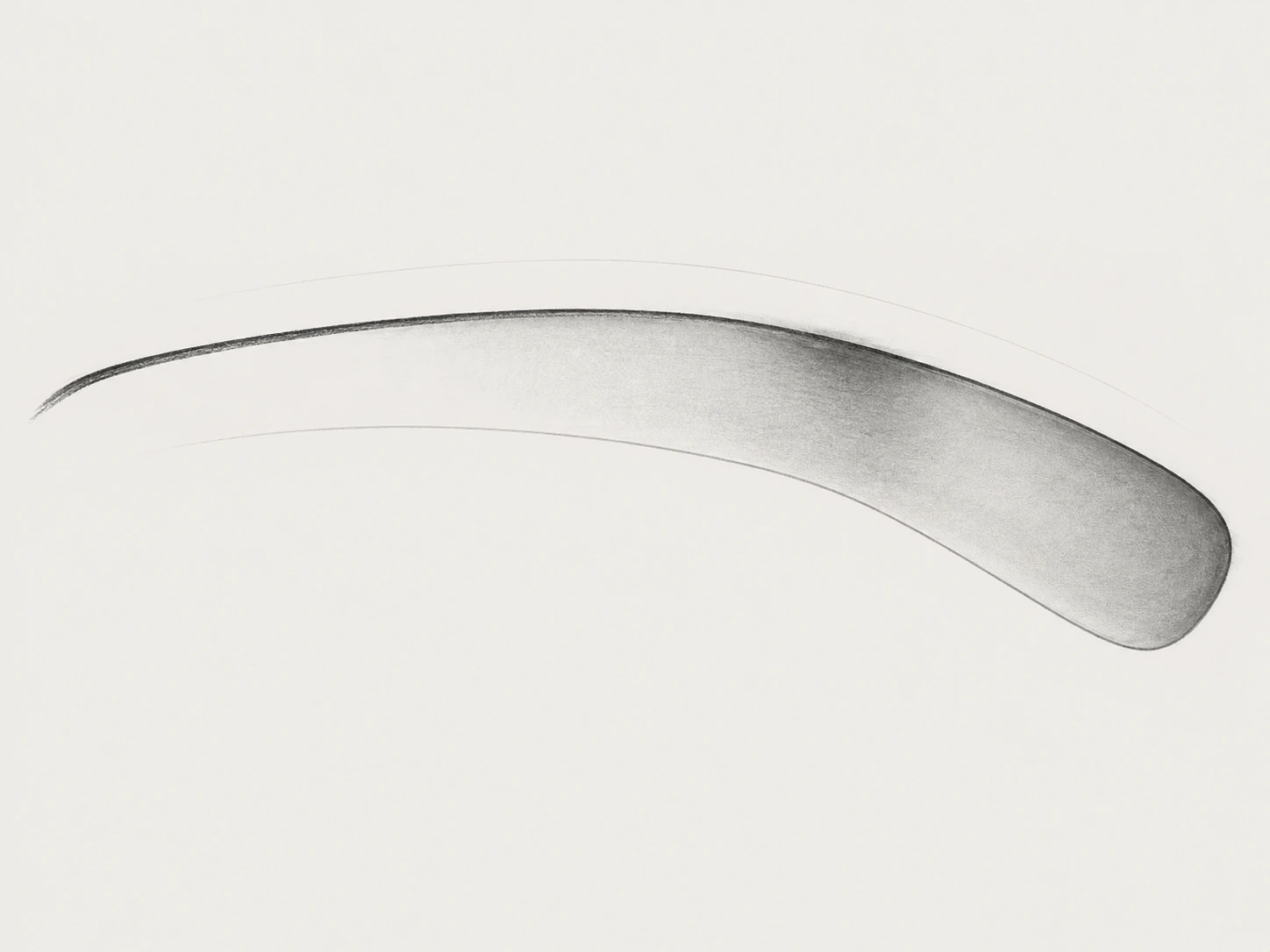
Straight, folded, continuous and divided forms offer different ways of meeting an edge. These studies compare the bend of the base with the rhythm of the cushions: where the surface continues, where it pauses, and where the direction changes.
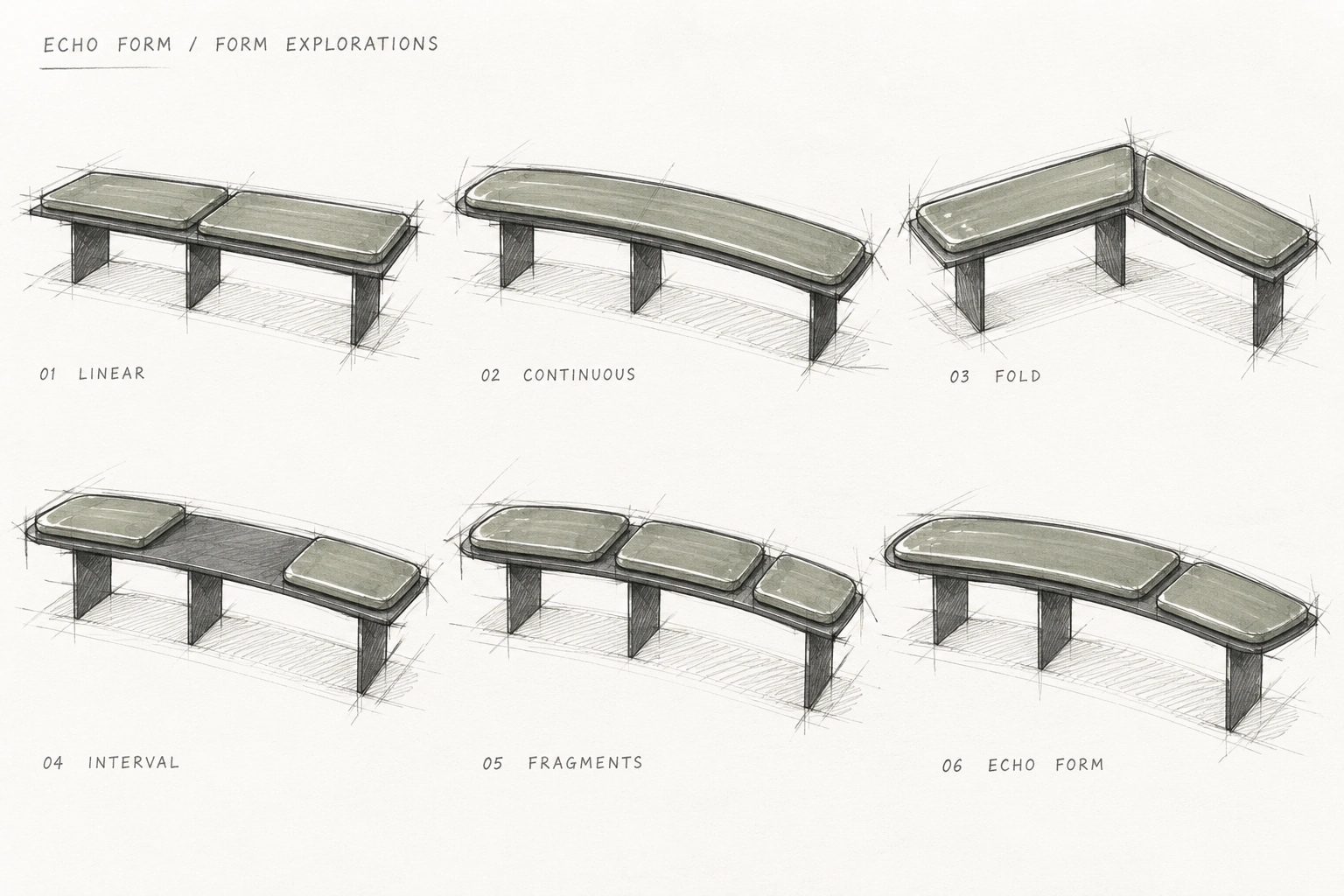
Continuity below. An interval above.
A straight bench establishes a baseline. Smaller fragments create a repeated rhythm. Echo Form brings those fragments into two unequal surfaces, keeping the turning line of the base visible between them.
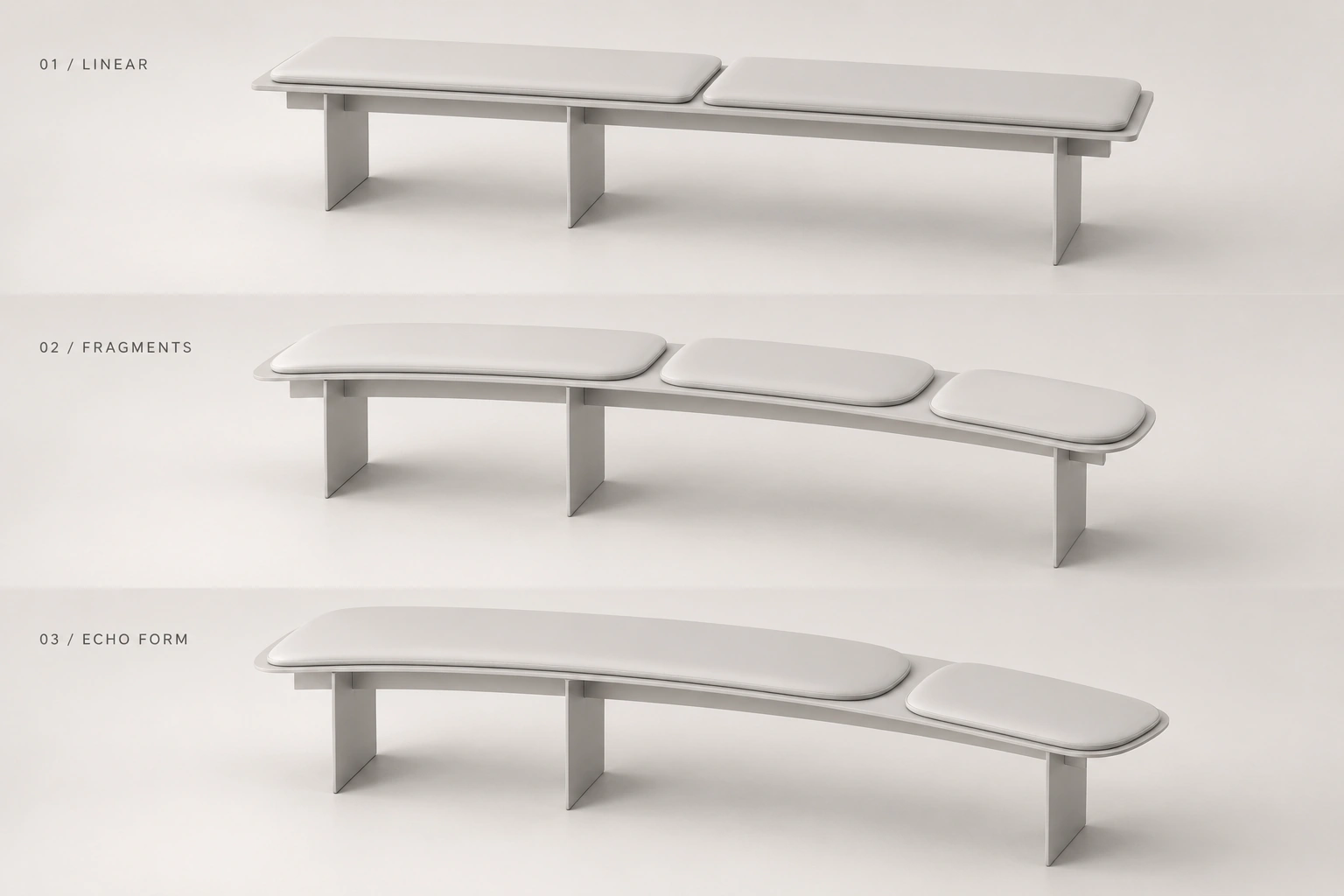
LINE STUDY
03 / MATERIAL & STRUCTURE
Soft surface, clear support.
Thin upholstery softens the upper surface without concealing its outline. Beneath it, a dark steel seat plane, a longitudinal apron and three vertical plate legs give the bench a precise edge and a legible supporting rhythm.
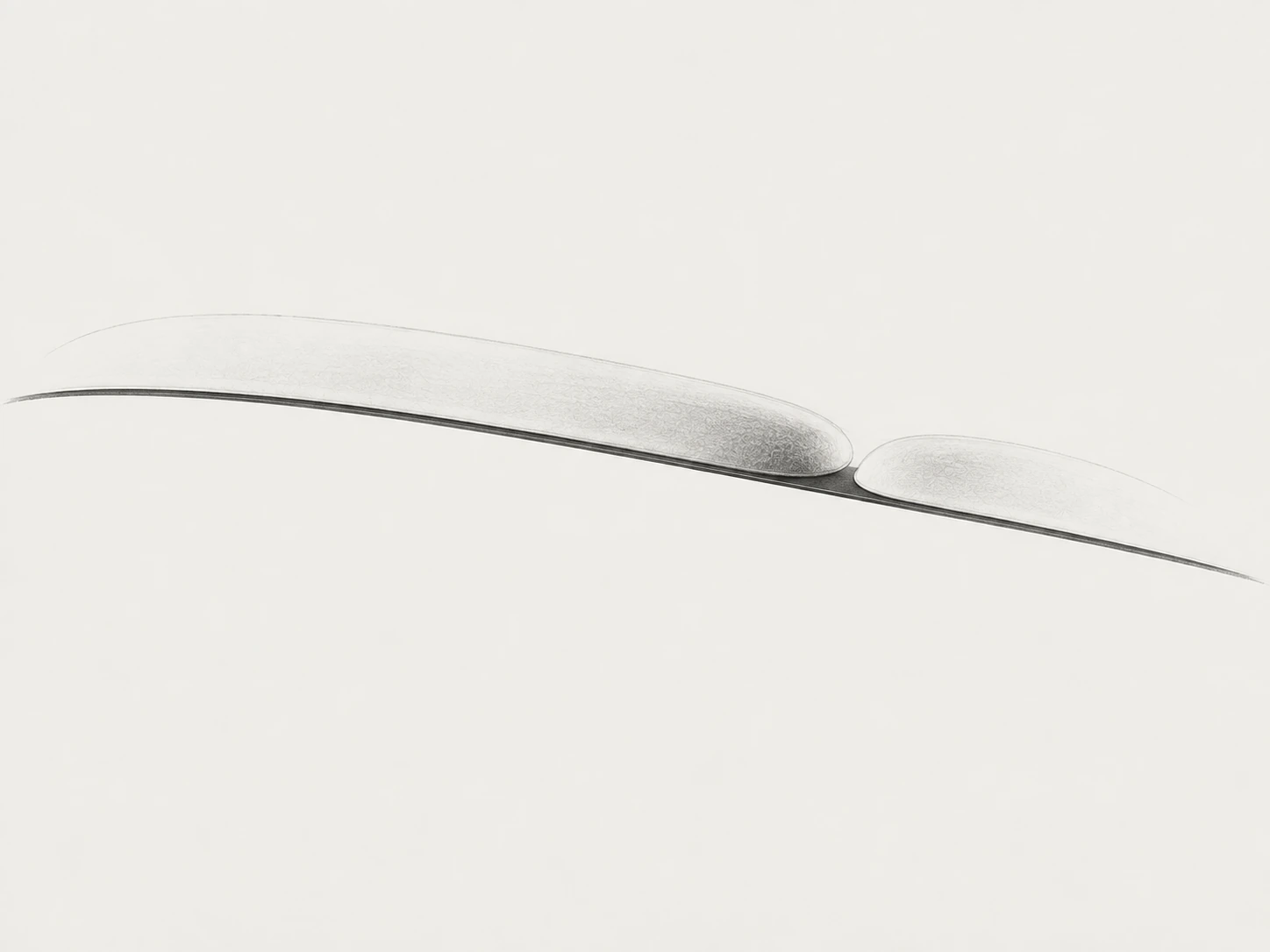
MATERIAL / CONTACT
A continuous structure carries weight. Soft surfaces respond to contact.
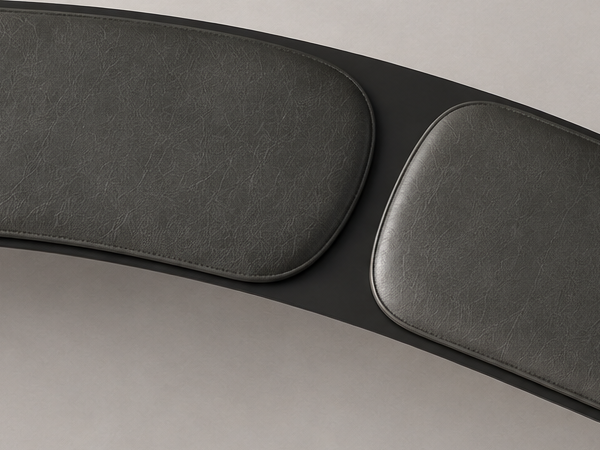
CONTACT / EDGE
At the interval, soft cushion edges reveal the continuous steel plane beneath.
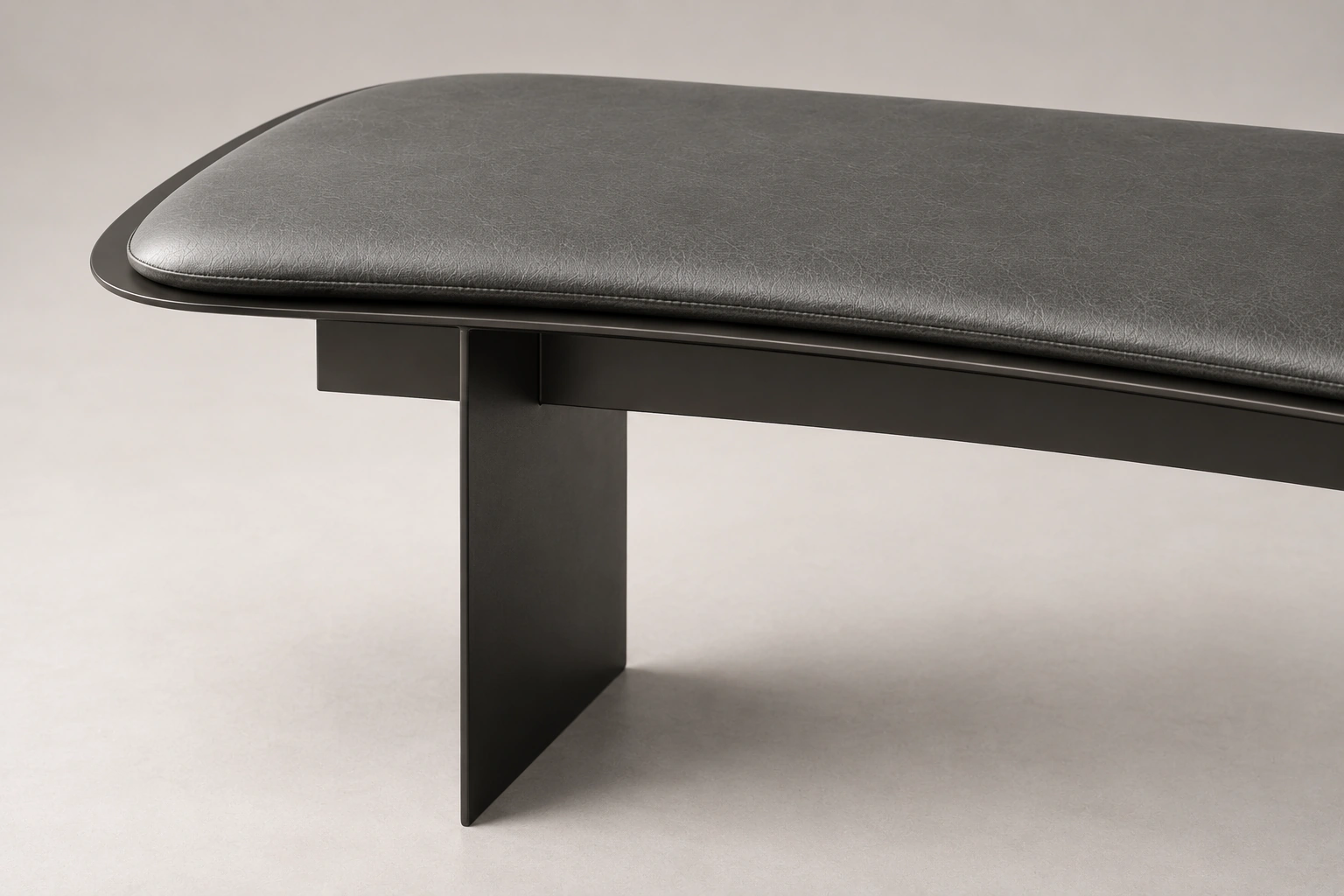
The line continues past the leg.
At the long end, the apron projects beyond the first support. This small extension lets the horizontal line remain visible. The inset cushion leaves a narrow steel margin, holding the soft and hard edges apart.
04 / IN PLACE
The corner becomes a place to stay.
Set against two adjoining walls, the bench follows the room’s change of direction. The longer side accommodates company; the shorter end offers a more individual pause. A pair of books is enough to suggest everyday use.
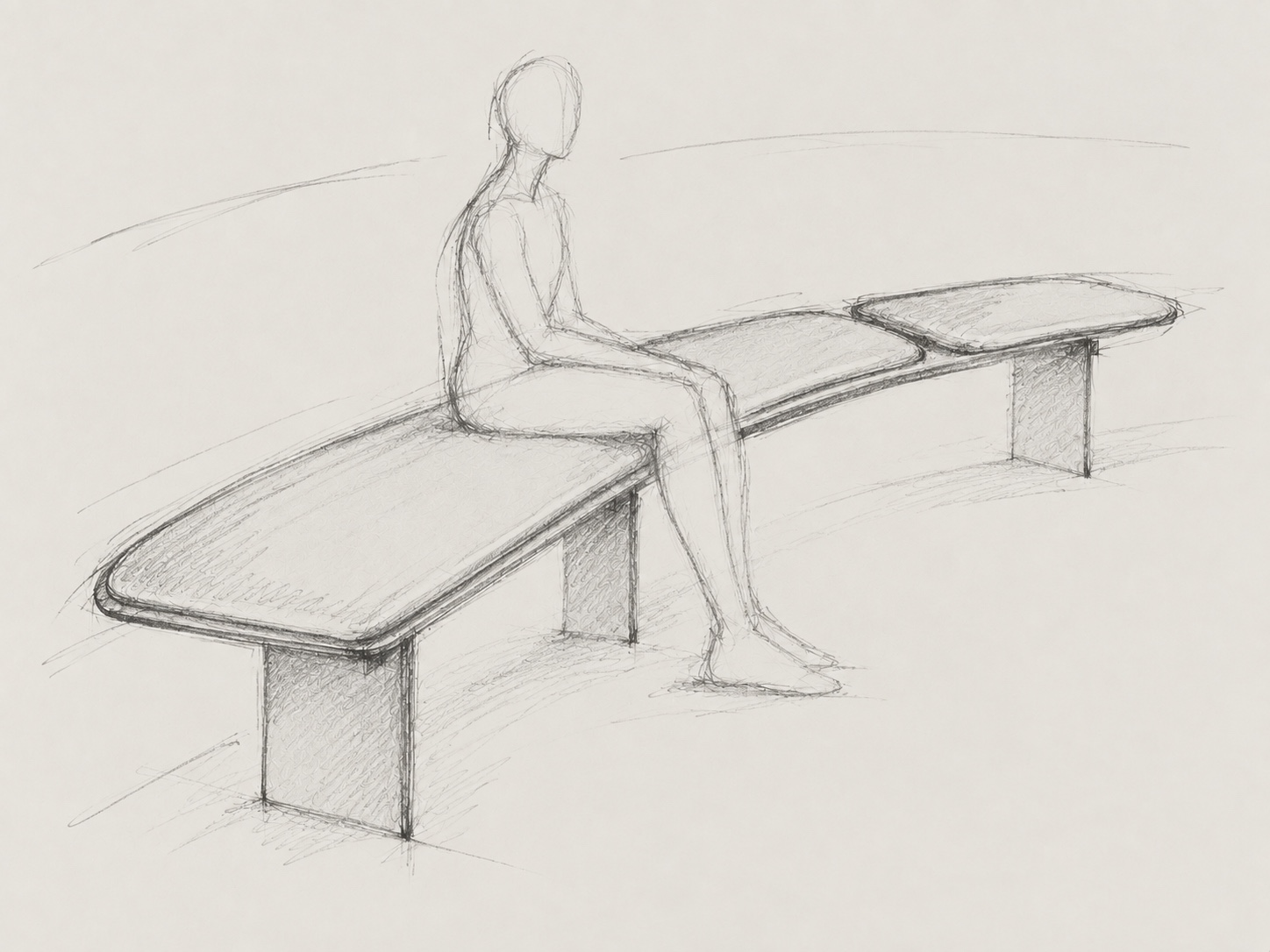
BODY / PLACE
The form follows the turn of the space. The body finds a place to pause.